
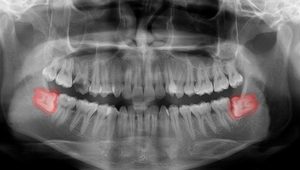
Under ideal circumstances, teeth emerge perpendicular to the gumline. This allows for proper dental alignment, which in turn supports healthy chewing, good oral hygiene, and an attractive smile. Unfortunately, there are circumstances that can cause teeth to grow in sideways; this is particularly common with the wisdom teeth. What causes their slanted development, and what else should you know about sideways wisdom teeth? This blog post offers helpful information.
Why Do Wisdom Teeth Grow Sideways?
The wisdom teeth are the third and final set of molars to develop. They often start to appear during adolescence or early adulthood. At that point, the rest of the teeth are already in place, so there is not always enough room for additional teeth. Bone, gum tissue, and neighboring teeth can affect the development of the wisdom teeth and cause them to grow in at an angle. In some cases, they are completely horizontal.
In most cases, tilted or sideways wisdom teeth are impacted. Essentially, this means they are stuck partially or fully beneath the gumline.
Problems Caused by Sideways Wisdom Teeth
An impacted, sideways wisdom tooth may not cause any pain or other symptoms at first. However, these teeth can lead to problems over time, including:
- Bite changes: In rare cases, a wisdom tooth can press so hard against its neighboring molars that it leads to crowding and bite misalignment.
- Pain: As wisdom teeth struggle to emerge from the gumline, they can cause soreness and discomfort in both the gums and surrounding teeth.
- Oral hygiene challenges: A slanted wisdom tooth that emerges only partially from the gumline can be difficult to clean. This increases the risk of decay, cavities, gum disease, and bad breath. In some cases, dangerous infections and abscesses develop.
Protecting Your Oral Health
How can you protect yourself from the risks of sideways wisdom teeth? Make sure to visit your dentist regularly. During routine checkups, they should perform a visual examination and periodically take X-rays to see how the wisdom teeth are positioned and whether they are likely to cause any problems.
Seeking care is especially important if you notice symptoms that you believe are related to your wisdom teeth, such as pain, swelling, pimple-like bumps on the gums, or a foul taste or odor.
If your wisdom teeth are threatening your oral health, it would be best to get them removed. A skilled oral surgeon can extract even sideways wisdom teeth that are stuck fully beneath the gumline.
Sideways wisdom teeth look strange, but they are a common problem! Talk to your dentist to learn more about your third molars and how they may affect your oral health.
Meet the Practice
At Piney Point Oral & Maxillofacial Surgery of Cypress, our team is proud to provide a broad range of services, including surgical removal of impacted wisdom teeth. If your dentist has recommended that you get your wisdom teeth removed, we are ready to consult with you about the details of your surgery. To learn more or to set up an appointment, contact our office at 713-364-9903.